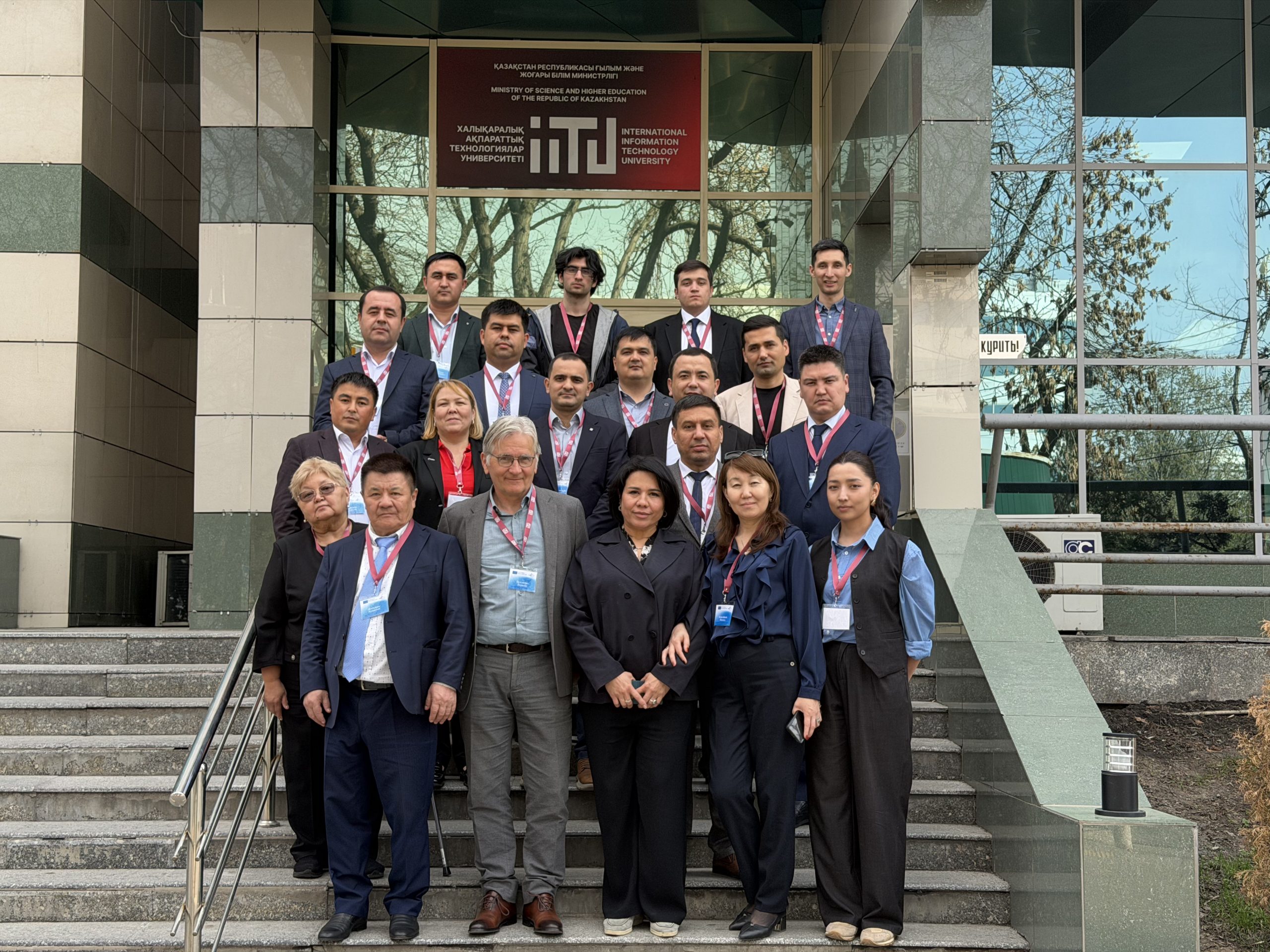
📍 International Information Technology University, Almaty, Kazakhstan
📅 1 April 2026
The second day of the Erasmus+ Capacity Building in Higher Education (CBHE) Cyber4CA workshop represented a pivotal transition from analytical knowledge exchange to structured co-creation and strategic development of cybersecurity education frameworks. Building upon the insights generated during the initial phase of the workshop, the activities of Day 2 were designed to transform research findings into practical, scalable, and context-sensitive academic solutions.

The day commenced with a comprehensive and methodologically structured reflection on the outcomes of Day 1. During this session, participants systematically reviewed previously identified gaps in cybersecurity education, examined best practices derived from European partner institutions, and established priority areas for further development. This reflective exercise ensured a shared understanding among consortium members and provided a robust analytical foundation for subsequent collaborative work.
Within the framework of Session 3, a series of expert-led presentations addressed specialized and forward-looking topics. These included the definition and standardization of cybersecurity competencies in alignment with evolving labour market requirements, the development of qualification frameworks and skill sets for future professionals, as well as the design and implementation of CyberLab models and training programs. The presented approaches emphasized the importance of integrating theoretical knowledge with practical competencies, thereby ensuring that academic programs remain relevant to industry demands and international standards.
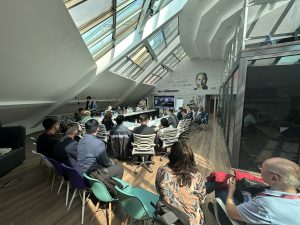
A central and highly interactive component of the day was the organization of multidisciplinary international working groups. These groups were tasked with addressing key thematic dimensions critical to the project’s objectives. Discussions on curriculum content and structure involved a comparative evaluation of existing EU and Central Asian programs, identification of missing or underrepresented subject areas—such as incident response, digital forensics, and blockchain security—and the formulation of modernization strategies incorporating innovative pedagogical approaches. In parallel, dedicated groups explored the development of CyberLabs and practical training environments, focusing on infrastructure requirements, equipment specifications, hands-on learning methodologies, and the adaptation of established European practices to the socio-economic and institutional contexts of Central Asia.
Furthermore, significant attention was devoted to policy alignment and institutional support mechanisms, including accreditation frameworks, governance models, faculty capacity building, and long-term sustainability strategies. These discussions underscored the necessity of aligning academic innovation with national educational policies and industry expectations to ensure effective implementation and scalability.
The results of the working group sessions were formally presented during plenary discussions, where each group articulated a set of actionable and evidence-based recommendations. These outputs were subsequently reviewed and refined under the guidance of Work Package leaders (WP2 – analysis, WP3 – program development, WP4 – CyberLab implementation), ensuring coherence with the overarching project framework and alignment with strategic objectives.
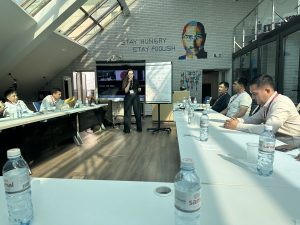
Overall, the second day of the workshop made a substantial contribution to operationalizing analytical findings into concrete educational and institutional solutions. It supported the design of forward-looking Master’s degree programs in cybersecurity, reinforced the integration of practice-oriented learning through CyberLab infrastructures, and facilitated consensus-building among international partners.
The workshop will proceed with sessions dedicated to the consolidation of final recommendations, formalization of decisions, and strategic planning for the subsequent implementation phases of the Cyber4CA project, thereby advancing its mission to enhance cybersecurity education across Central Asia.
Leave a Reply