Category: activities

  • Cyber4CA Training Participants Explore the Infrastructure of the Universidad Politécnica de Madrid and the Scientific Legacy of Muhammad al-Khwarizmi

    Cyber4CA Training Participants Explore the Infrastructure of the Universidad Politécnica de Madrid and the Scientific Legacy of Muhammad al-Khwarizmi

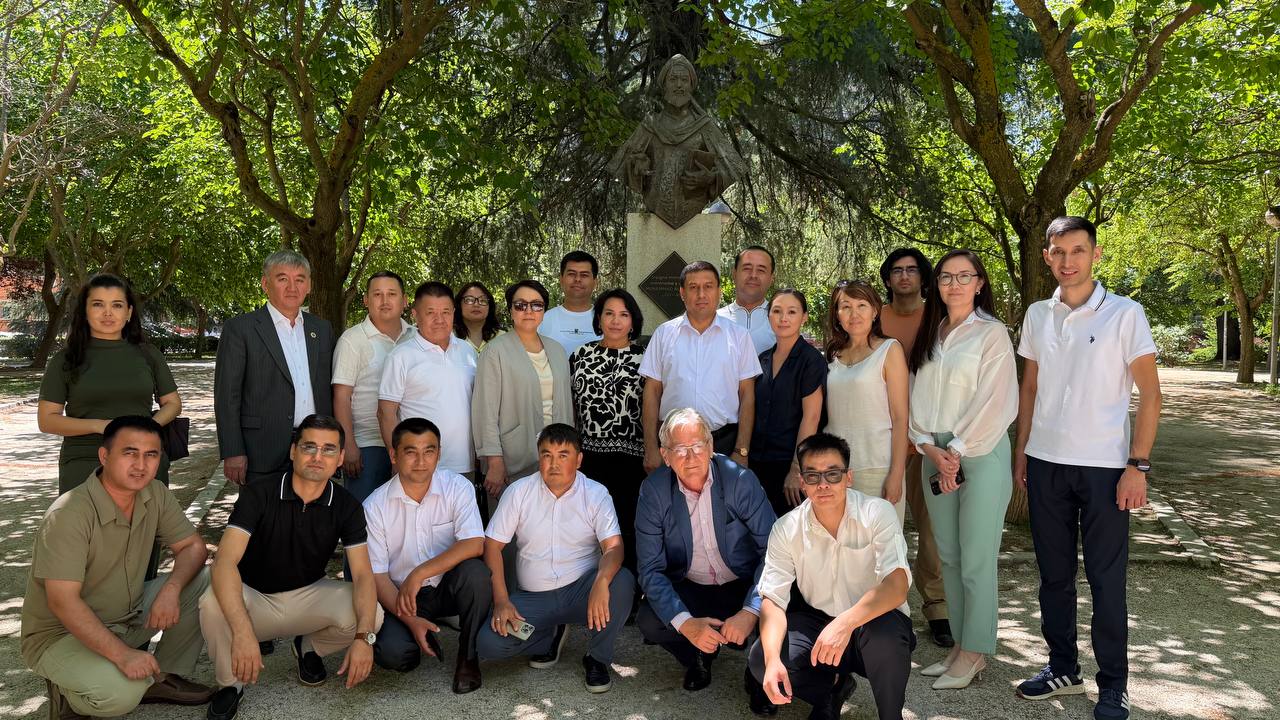
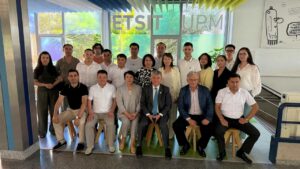
    As part of the first day of the international training programme for teaching staff organised in Madrid within the framework of the Cyber4CA project, participants visited the Universidad Politécnica de Madrid and its Higher Technical School of Telecommunication Engineering.

    During the visit, project participants became closely acquainted with the university’s academic environment, educational infrastructure, modern laboratories, and technical facilities supporting teaching and research activities in the field of cybersecurity. Representatives of the university provided information on the organisation of cybersecurity education, the integration of theoretical knowledge with practical laboratory sessions, and the use of virtual environments and modern technological tools.
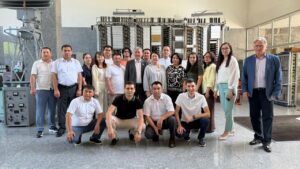
    The visit enabled participants to study advanced approaches to the training of cybersecurity specialists, observe the integration of education and scientific research, and consider how these practices could be adapted to the educational processes of partner universities. The project partners also exchanged views on the development of practice-oriented education, the establishment of CyberLab facilities, and the expansion of academic cooperation.

    A particularly significant part of the visit was the tour of the monument dedicated to the memory of the great encyclopaedic scholar Muhammad al-Khwarizmi. Muhammad ibn Musa al-Khwarizmi is recognised in the history of world science as an outstanding scholar who made an invaluable contribution to the development of mathematics, astronomy, geography, and computational methods.
    Al-Khwarizmi’s scientific works in the field of algebra laid an important foundation for the establishment of algebra as an independent branch of science. His works devoted to the systematic solution of equations had a profound influence on the subsequent development of scientific schools in both the East and the West. The term “algebra” itself is associated with the concept of “al-jabr” used in one of his most renowned works.

    The concept of an “algorithm”, which is widely used today in information technology, programming, artificial intelligence, and cybersecurity, is also directly connected to the Latinised form of Al-Khwarizmi’s name. Algorithms form the basis of modern digital systems and play a vital role in data processing, software development, the design of security mechanisms, and the detection of cyberattacks.

    From this perspective, the visit to the monument of Muhammad al-Khwarizmi further enriched the scientific and symbolic significance of the Cyber4CA training. The great scholar’s scientific legacy demonstrates the historical foundations of modern cybersecurity, computer science, and digital technologies. His scientific reasoning, precise computational methods, and systematic approach continue to retain their relevance in the development of contemporary innovative technologies.
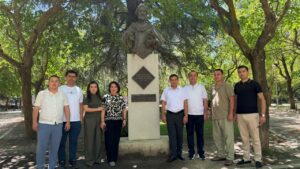
    This academic and cultural-educational visit once again highlighted the close relationship between historical scientific heritage and modern technological education. It provided participants not only with an opportunity to study the university’s infrastructure but also to gain a deeper understanding of the contribution made to world science by one of the greatest scholars to emerge from Central Asia.


  • Dissemination and Exploitation

    Dissemination and Exploitation

    Duration: M1 – M36

    Lead Beneficiary: University of Management and Future Technologies (UMFT, Uzbekistan)

    Work Package 6 focuses on ensuring the widespread visibility and impact of the Cyber4CA project’s outcomes. This work package is responsible for developing a comprehensive Dissemination and Exploitation Plan, creating an engaging project website and promotional materials, and organizing informational events to promote newly developed cybersecurity courses. Additionally, it aims to promote the application of cybersecurity in Partner Country (PC) higher education institutions, enhancing the relevance and reach of the project across the region.

    Key Objectives:

    1. Creation of the Dissemination and Exploitation Plan to guide the communication and outreach activities.
    2. Development of the project website and promotional materials to increase visibility and engagement.
    3. Organizing Info days to promote newly developed cybersecurity courses among students.
    4. Promotion of training programs to increase participation and awareness.
    5. Promotion of the application of cybersecurity in higher education institutions across partner countries, amplifying the project’s impact.

    Main Activities:

    • Development of the Dissemination and Exploitation Plan to outline strategies for sharing the project’s outcomes.
    • Creation of the project website and promotional materials to enhance visibility and engage stakeholders.
    • Organizing Cyber Security Days for students to introduce and promote newly developed courses and training programs.
    • Promoting cybersecurity training programs to increase participation and awareness.
    • Promoting the application of cybersecurity in higher education institutions to ensure long-term relevance.

    Key Deliverables:

    • D6.1 – Project website and social networks developed
    • D6.2 – Dissemination and exploitation plan developed
    • D6.3 – Project promotional material developed
    • D6.4 – Mid-term report on the implementation of the Dissemination and Exploitation Plan
    • D6.5 – Updated project website and social networks
    • D6.6 – Report on the implementation of the Dissemination and Exploitation Plan upon project completion

    This work package ensures that the Cyber4CA project’s outcomes are widely disseminated and effectively exploited, ensuring long-term impact and sustainability in cybersecurity education across Partner Country institutions.


  • Quality Assurance and Monitoring

    Quality Assurance and Monitoring

    Duration: M1 – M36

    Lead Beneficiary: Scuola Superiore Sant’Anna (SSSA, Italy)

    Work Package 5 focuses on maintaining high standards throughout the Cyber4CA project by ensuring robust quality assurance and monitoring systems. This includes establishing a Quality Assurance Committee (QAC), developing a quality assurance plan, conducting regular internal reviews, and collaborating with external experts for independent evaluations. The goal is to ensure transparency, continuous improvement, and reliable results through structured monitoring and reporting.

    Key Objectives:

    1. Formation of the Quality Assurance Committee (QAC) to oversee all quality processes.
    2. Development and adoption of a comprehensive quality assurance plan to guide project execution.
    3. Organization of regular QAC meetings to monitor progress and address any issues.
    4. Preparation of internal quality control reports to evaluate project performance.
    5. Implementation of external quality control measures, including evaluations by independent experts.
    6. Reporting on external quality control to ensure an unbiased assessment of the project’s outcomes.

    Main Activities:

    • Development of the Quality Assurance Plan to define monitoring and evaluation criteria.
    • Regular QAC meetings to track progress and discuss improvements.
    • Internal Quality Assurance Control to ensure that all project activities adhere to established standards.
    • External Quality Evaluation to assess the project from an independent perspective, ensuring credibility and objectivity.
    • Inter-Project Coaching (IPC) to support partners in achieving quality standards and to enhance collaboration.

    Key Deliverables:

    • D5.1 – Quality Assurance Plan created
    • D5.2 – Report on the Inter-project Coaching meeting
    • D5.3 – Mid-term internal and external quality report
    • D5.4 – Comprehensive internal and external quality report at project completion

    This work package ensures that the Cyber4CA project is conducted with a focus on continuous improvement, delivering reliable outcomes that meet academic and operational standards, and maintaining accountability at all stages of the project.

  • CyberLab and Training Program Development

    CyberLab and Training Program Development

    Duration: M8 – M30

    Lead Beneficiary: Universidad Politecnica De Madrid (UPM, Spain)

    Work Package 4 is dedicated to establishing Cyber Security Centres within Partner Country institutions (CAPIs), focusing on resource planning, equipment procurement, and infrastructure setup. This work package also includes the development and implementation of tailored training programs aimed at enhancing the cybersecurity expertise of both academic and administrative staff, ensuring the sustainable operation of these centres and the continued development of cybersecurity capacity.

    Key Objectives:

    1. Identify resource requirements for the establishment of CyberLabs at CAPIs.
    2. Procure equipment and initiate tendering procedures for necessary infrastructure.
    3. Set up Cyber Security Centres and monitor their progress throughout the project.
    4. Develop programs tailored to the needs of the Cyber Security Centres.
    5. Provide training to both academic and non-academic staff to ensure effective operations and expertise development.

    Main Activities:

    • Development of CyberLabs at CAPIs, including the purchase and setup of equipment.
    • Establishment of Cyber Security Centres under the CyberLabs framework.
    • Design and implementation of specialized cybersecurity training programs for academic and administrative staff.
    • Enrollment of participants in the training programs, ensuring broad engagement and knowledge dissemination.

    Key Deliverables:

    • D4.1 – CyberLab and Cyber Security Centres establishment
    • D4.2 – Cyber Security training programs developed and implemented
    • D4.3 – Report on implemented Cyber Security trainings

    This work package plays a critical role in the hands-on training and capacity-building necessary for creating a robust cybersecurity infrastructure within the partner universities, ensuring the long-term sustainability and success of the Cyber4CA project.

  • Development and Implementation of Cyber Security-Related Study Programs and Courses

    Development and Implementation of Cyber Security-Related Study Programs and Courses

    Duration: M6 – M36

    Lead Beneficiary: University of Antwerp (UAntwerp, Belgium)

    Work Package 3 is focused on establishing high academic standards and implementing innovative Cyber Security-related programs across CAPIs. This includes developing comprehensive course curricula, defining course objectives, competencies, and teaching methodologies, and ensuring the successful accreditation and deployment of graduate-level programs aligned with EU best practices.

    Key Objectives:

    1. Define and develop standards for cybersecurity-related courses at CAPIs.
    2. Establish course objectives, content, and learning outcomes, including specific competencies and teaching methodologies.
    3. Develop a comprehensive Course Catalogue for cybersecurity programs.
    4. Develop innovative graduate-level cybersecurity courses that adhere to EU HEI best practices.
    5. Develop and accredit graduate programs focused on cybersecurity.
    6. Ensure the implementation of cybersecurity courses across CAPIs.

    Main Activities:

    • Specification of required competencies and learning outcomes for each course.
    • Implementation of the developed cybersecurity courses within partner institutions.
    • Design of cybersecurity-related courses, ensuring alignment with current industry needs.
    • Training of teaching staff to effectively deliver the new curriculum.
    • Development of laboratory manuals to support practical training and hands-on learning.
    • Development and accreditation/re-accreditation of cybersecurity curricula at the graduate level.

    Key Deliverables:

    • D3.1 – Catalogue of competences created
    • D3.2 – Catalogue of courses created
    • D3.3 – Laboratory manuals prepared
    • D3.4 – Teaching staff trained
    • D3.5 – Report on accreditation or reaccreditation of study program developed
    • D3.6 – Report on implemented Cyber Security-related courses

    This work package aims to ensure that Cyber Security education in Central Asia is both innovative and in line with international standards, ultimately contributing to the development of highly skilled cybersecurity professionals across the region.


  • Analysis of Cyber Security-Related Study Programs

    Analysis of Cyber Security-Related Study Programs

    Duration: M1 – M8

    Lead Beneficiary: University Politehnica of Bucharest (UNSTPB, Romania)

    Work Package 2 focuses on analyzing and adapting European Union (EU) best practices in cybersecurity education to the context of Uzbekistan. The goal is to enhance the quality of cybersecurity-related curricula in Central Asian Partner Institutions (CAPIs) and address emerging challenges in the field.

    Key Objectives:

    1. Identification of critical cybersecurity challenges requiring management within PC higher education.
    2. Assessment of the current state of cybersecurity in CAPIs and the existing curricula.
    3. Examination of existing curricula and courses in CAPIs and the best practices in cybersecurity from EU countries.
    4. Conducting a survey on the needs and awareness of cybersecurity applications within CAPIs.
    5. Organizing a workshop on the comparative analysis of cybersecurity applications between EU and CAPIs.

    Main Activities:

    • Analysis of principal cybersecurity challenges within EU countries.
    • Evaluation of main problems regarding cybersecurity in Partner Countries.
    • Examination of existing cybersecurity centers at EU HEIs and their programs.
    • Workshop for comparative analysis of cybersecurity application in EU and CAPIs, discussing challenges and requirements.
    • Survey on public demand and awareness of cybersecurity in CAPIs.

    This work package aims to identify educational gaps and challenges in cybersecurity education, benchmark the best practices from EU universities, and raise awareness through surveys and workshops. By comparing regional and European approaches, it will guide the development of cybersecurity curricula tailored to the evolving needs of Central Asia’s higher education landscape.

    Key Deliverables:

    • D2.1 – Reports on analyses of key cybersecurity challenges
    • D2.2 – Report on cybersecurity centers at EU HEIs
    • D2.3 – Report of the workshop on cybersecurity
    • D2.4 – Report on the survey of public demand and awareness

    This work package will lay the groundwork for advancing cybersecurity education in Partner Countries, ensuring that curricula are aligned with both regional and international standards.


  • Project Management and Coordination

    Project Management and Coordination

    Duration: M1 – M36

    Lead Beneficiary: Tashkent University of Information Technologies (TUIT, Uzbekistan)

    Work Package 1 is dedicated to ensuring the effective, efficient, and sustainable management of the Cyber4CA project. By adhering to professional project management standards, this work package aims to guarantee the quality, timeliness, and financial compliance of all activities while promoting seamless collaboration among all project partners.

    Key Objectives:

    1. Establishment of the Quality Assurance Committee (QAC), Project Management Committee (PMC), and Steering Committee (SC).
    2. Organization of the kick-off meeting and subsequent project management meetings.
    3. Development of a comprehensive project management strategy.
    4. Coordination of daily tasks to ensure effective cooperation between all partners.
    5. Submission of progress and final reports to ensure project transparency and accountability.

    Main Activities:

    • Project Communication: Regular in-person, virtual meetings, and Steering Committee sessions to ensure constant communication across partners.
    • Quality Assurance: Implementation of tools such as GANTT charts, risk management strategies, and checkpoint reports to monitor project progress and resolve potential issues.
    • Financial Management: Oversight of project budgets, ensuring timely partner payments, and conducting internal financial evaluations.
    • Sustainability: Development of strategies ensuring the environmental and social sustainability of the project.

    Key Deliverables:

    • D1.1 – Kick-off meeting report
    • D1.2 – Project management plan developed and implemented
    • D1.3 – Midterm report on project meetings
    • D1.4 – Progress report submission
    • D1.5 – Management tools developed and applied
    • D1.6 – Final report on project meetings

    This work package lays the foundation for the project’s success by ensuring clear communication, structured management, and adherence to project goals, enabling all activities to be executed seamlessly within the set timeline and budget.